Project 1A (Group)
Pre-Design Studies & Analysis
Brief
he Project 1a Brief outlines the initial group phase for the final-year capstone architectural studio (PRJ60408), centered on the theme "Architecture with an Impact". Situated in George Town, Penang, a UNESCO World Heritage Site, the project proposes the creation of an "Urban Living Room: The Socio-Cultural Exchange Hub" situated between KOMTAR and Sia Boey Urban Archaeological Park. This initiative aims to bridge modern civic transportation hubs with layered historic landscapes, acting as a "city lobby" and "social condenser" that promotes cultural exchange, addresses environmental challenges like flash flooding and urban heat island effects through tropical sponge strategies, and aligns with the Penang 2030 vision.
Task
The Task for Project 1a requires student groups to conduct comprehensive pre-design research and contextual analysis across both macro and micro site scales to form a solid foundation for their design proposals. Guided by urban design theories such as Bentley’s Responsive Environments, students must systematically execute five main components: experiential site sensing, macro/micro urban site analysis (evaluating tangible and intangible factors), project impact analysis regarding social, environmental, and connectivity metrics, targeted precedent case studies, and the formulation of a preliminary architectural position and proposed program. The deliverables include a 20–25 minute group multimedia presentation, A1 or A0 presentation boards, and a 1:400 physical site model to be submitted in Week 4.
Presentation Board
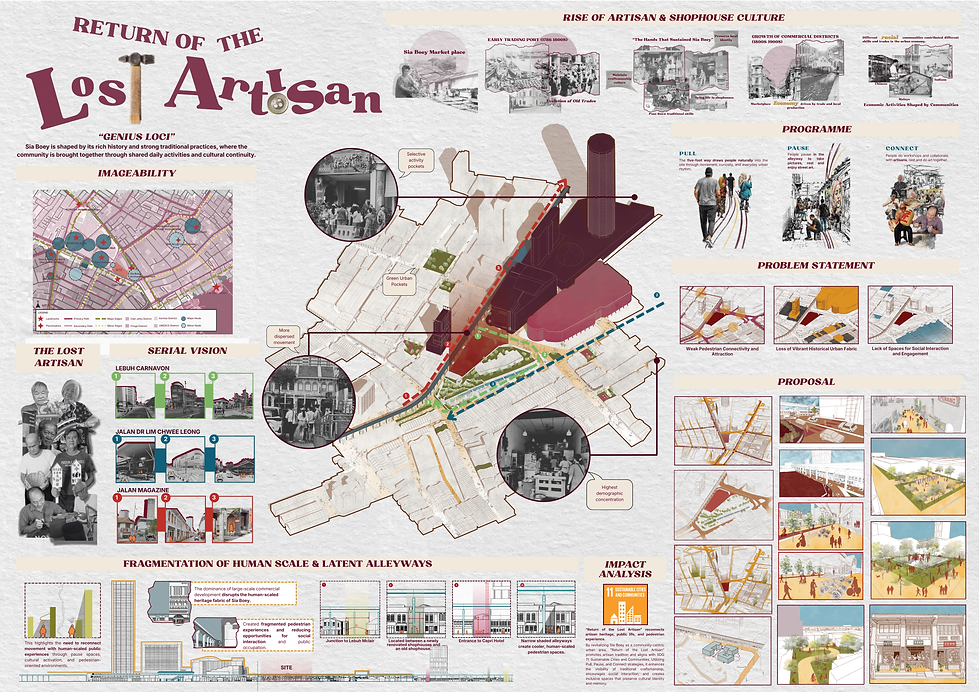.png)
REFLECTION
Through this project, I realized that Sia Boey's true spirit (genius loci) isn't just in its old shophouses, but in the traditional artisans and human-scale street life that once brought it to life. Analyzing the site opened my eyes to how modern mega-developments have cut off these historic alleyways, disconnecting pedestrians from the area's rich culture.
I learned that urban design isn't about creating big, shiny structures or static museum pieces, it's about fixing those broken human connections. Developing the Pull, Pause, Connect framework taught me how simple, intentional spatial moves, like activating five-foot ways, adding green pause spots in forgotten alleys, and creating interactive artisan spaces, can actually bring everyday culture and community back into a modern city.